A roof can look fine from the driveway and still have real storm damage. That is one reason homeowners often ask, what is hail roof damage, and how can you tell if it is serious enough to file a claim or schedule repairs.
The short answer is this: hail roof damage is physical impact damage caused when hailstones strike roofing materials hard enough to bruise, crack, loosen, or puncture them. On some roofs, the damage is obvious. On others, it is subtle at first and gets worse over time as sun, wind, and rain keep working on weakened areas.
If your home or commercial building in Alabama has been through a recent storm, understanding what hail actually does to a roof can help you avoid missing damage that leads to leaks, premature aging, and insurance issues later.
What Is Hail Roof Damage on a Roof?
Hail does not damage every roof the same way. The effect depends on the size and density of the hail, wind speed, the age of the roof, and what type of roofing system is installed.
On asphalt shingles, hail often knocks away granules, creates soft bruises, or cracks the mat underneath. On metal roofing, it may leave dents, loosen seams, or damage protective coatings. On commercial membranes such as TPO, PVC, or EPDM, hail can cause punctures, splits, or surface stress that shortens the life of the system.
That is why hail damage is not just about visible dents. It is about whether the roofing material has lost its ability to protect the structure the way it should.
Why Hail Damage Is Easy to Miss
Many property owners expect hail damage to look dramatic. Sometimes it does. More often, it shows up as small impact marks, scattered granule loss, or damage around roof accessories like vents, flashing, and soft metals.
A newer roof may hide the damage better than an older one. Likewise, a steep roof or a multi-story commercial building is not something most owners can inspect closely from the ground. Even if there is no immediate leak, hail can reduce the roof’s service life and create weak spots that fail during the next storm.
This is where a professional inspection matters. A trained eye looks for patterns of storm impact, not just obvious holes.
Common Signs of Hail Roof Damage
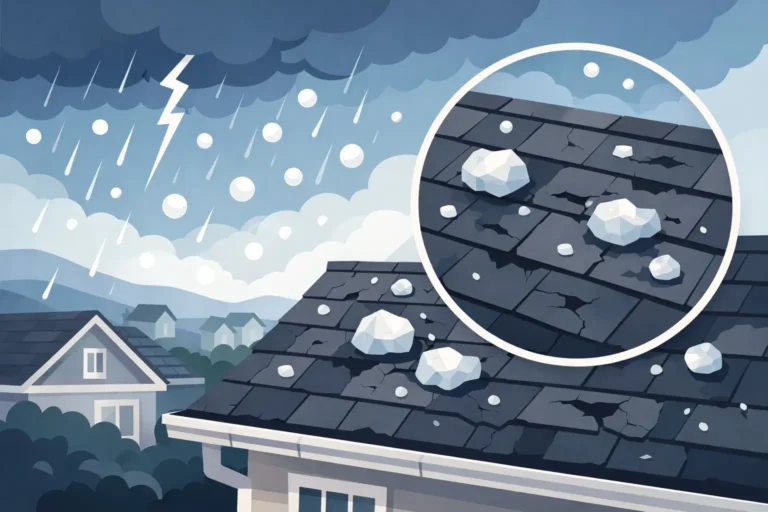
The signs depend on the roofing material, but there are a few consistent clues. On asphalt shingle roofs, hail often leaves random dark spots where granules have been displaced. You may also see circular impact areas that feel soft when touched, cracked shingles, or exposed fiberglass matting.
On metal roofs, dents on panels, ridge caps, vents, gutters, and downspouts can signal storm impact. Some denting is cosmetic, but it depends on how severe it is and whether seams, fasteners, or coatings were affected.
For flat and low-slope commercial systems, the signs may include punctures, compressed insulation, split membrane areas, or impact marks around rooftop units and drainage points. These systems require a closer inspection because small punctures can lead to water intrusion that is not obvious right away.
You might also notice signs away from the roof itself. Dented gutters, damaged window screens, bruised siding, and pitted HVAC fins can all support the case that hail hit the property hard enough to damage the roof too.
What Hail Damage Looks Like on Asphalt Shingles
Because asphalt shingles are common in residential roofing, this is where many insurance questions start. Hail typically creates one of two main problems: surface granule loss or bruising beneath the shingle surface.
Granules matter more than many people realize. They help protect the shingle from UV exposure and weathering. When hail knocks granules off, the asphalt layer underneath becomes more vulnerable to heat and long-term deterioration.
Bruising is another issue. A shingle can look mostly intact but have a soft spot where the impact weakened the material. Over time, that area may crack, split, or fail. In Alabama’s heat and storm cycles, that kind of hidden damage can turn into a much bigger repair need than it first appears.
Cosmetic vs Functional Damage
One of the most common points of confusion is whether hail damage is only cosmetic or truly functional. That answer depends on the roofing system and the severity of the impact.
Cosmetic damage affects appearance without clearly reducing waterproof performance. Dents in some metal roof panels may fall into this category. Functional damage means the roof’s ability to shed water, resist weather, or protect the structure has been compromised.
The difference matters because insurance carriers do not always treat cosmetic and functional damage the same way. It also matters for your long-term costs. What seems minor today may still affect resale value, roof lifespan, or future insurability.
That is why it helps to have documentation from a contractor who understands both roofing systems and the insurance process.
What Is Hail Roof Damage for Insurance Purposes?
From an insurance standpoint, hail roof damage usually needs to be documented as storm-related impact that caused a covered loss. That means more than saying, “My roof looks bad.” It usually means showing clear evidence of hail strikes, identifying which components were affected, and explaining whether repair or replacement is appropriate.
Insurers may look at the age of the roof, the extent of damage, local storm dates, and whether there are collateral indicators such as dented metal components around the property. They may also compare hail hits to normal wear and tear. That distinction matters because a worn roof is not the same thing as a hail-damaged roof, even if both need attention.
This is where many property owners get frustrated. They know a storm came through, but they are not sure what proof is needed. A proper inspection and photo documentation can make that process much clearer.
When Hail Damage Calls for Repair vs Replacement
Not every hail event means you need a full roof replacement. In some cases, a limited repair is enough, especially if damage is isolated and the rest of the roof remains in solid condition.
But replacement becomes more likely when the damage is widespread, when shingles are fractured or heavily bruised, when a commercial membrane has multiple punctures, or when matching materials are no longer available. Age also plays a role. If a roof is already near the end of its service life, repairs may only delay a larger problem.
A trustworthy contractor should explain the trade-off honestly. Repair may cost less now, but if it leaves you with recurring issues or a patchwork system that fails again soon, replacement may be the better financial decision.
Why You Should Not Wait Too Long
After a hailstorm, many owners take a wait-and-see approach. That is understandable, especially if there is no active leak. The problem is that delays can make both roofing issues and claim documentation harder.
Storm evidence fades. Granules continue washing away. Minor cracks expand. Water finds pathways that were not there the week after the storm. If you wait until interior stains appear, the damage may already be larger and more expensive.
There is also the insurance timing issue. Policies often have deadlines for reporting storm damage. The sooner the roof is inspected, the easier it is to connect the damage to a specific weather event and document it properly.
What a Professional Inspection Should Include
A real hail inspection should go beyond a quick glance. It should include a review of the full roofing system, not just the most visible slopes. That means shingles or panels, flashing, vents, pipe boots, ridge components, valleys, gutters, and related soft metal items.
For commercial roofs, the inspection should also cover seams, membrane condition, drainage areas, rooftop penetrations, and signs of insulation compression or puncture damage. Good documentation matters too. Photos, marked test areas when appropriate, and a clear explanation of what was found help property owners make informed decisions.
Bluefin Exteriors LLC works with property owners across Tuscaloosa, Birmingham, and surrounding Alabama communities to inspect storm-damaged roofs and help document what insurers need to see. For many customers, that guidance removes a lot of uncertainty from the process.
What Homeowners and Property Owners Should Do Next
If you suspect hail damage, the best next step is simple: get the roof professionally inspected before making assumptions. Do not rely only on what you can see from the ground, and do not assume that no leak means no damage.
An honest, no-pressure inspection gives you a clearer answer. If the roof is fine, you get peace of mind. If there is damage, you can move forward with better information about repairs, replacement, and whether an insurance claim makes sense.
After a storm, clarity matters more than guesswork. A careful inspection today can save you from a much more stressful roofing problem later.
